
From a question to a published paper, without losing the thread.
Five steps, one continuous record. Every protocol keeps its literature, every result keeps its protocol, and every claim in your manuscript can be traced back to the day you ran it.
One project, start to finish
Pick a step to see the screen you'd actually be looking at.
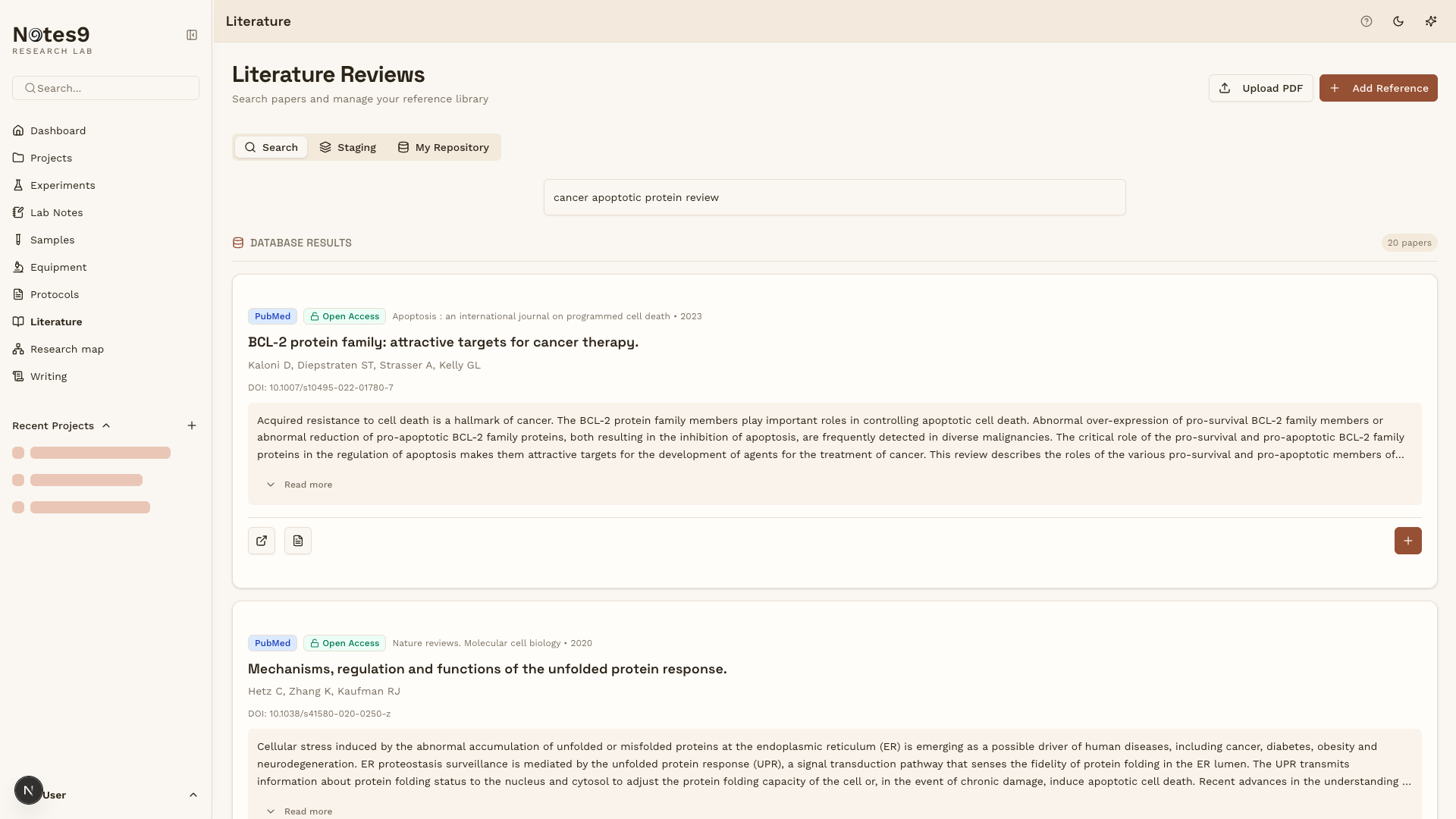
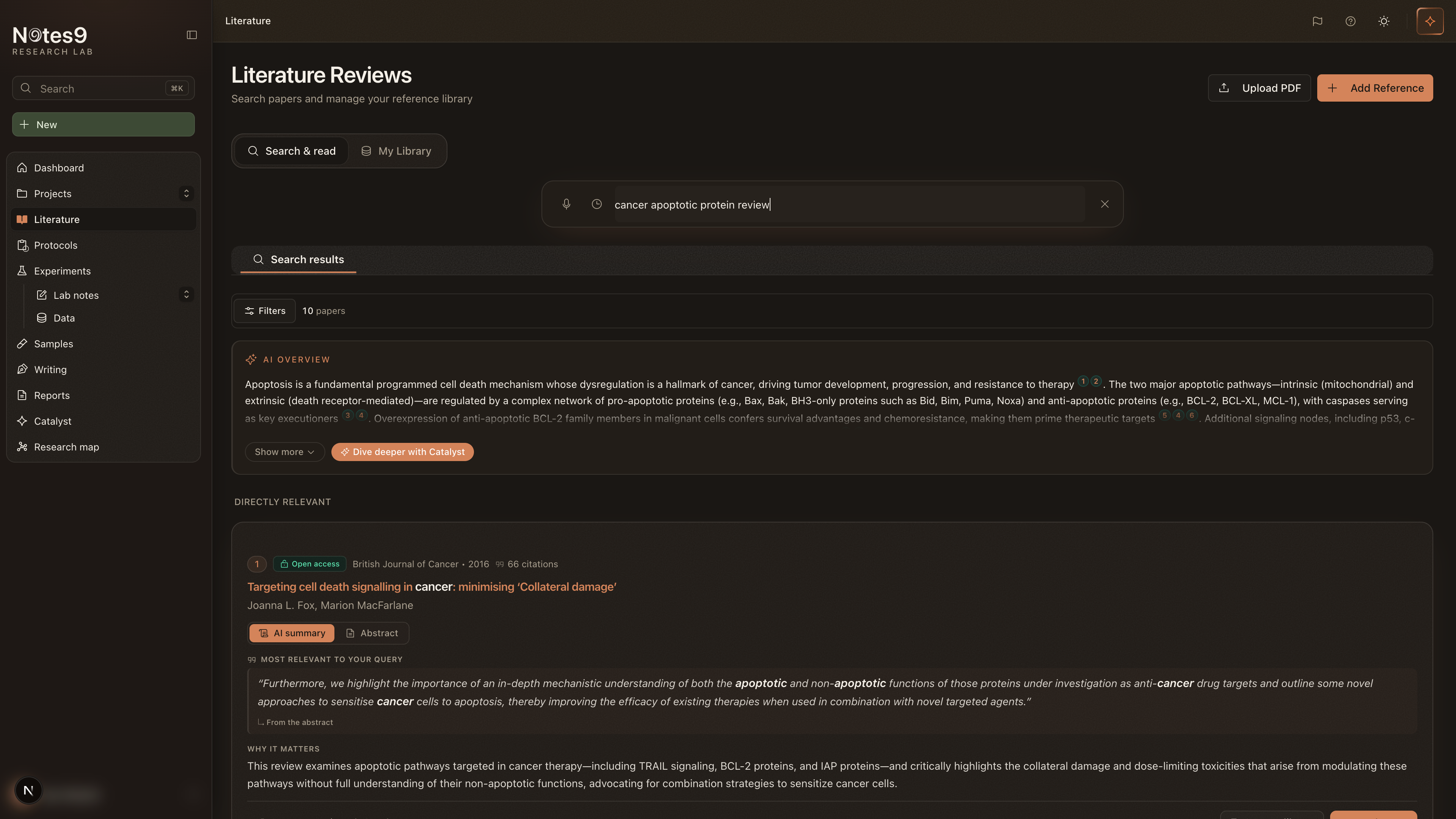
Start from the literature
Ask a research question in plain language. Notes9 searches PubMed, Europe PMC and OpenAlex, summarises what it finds, and saves the papers that matter into your library, with the PDFs attached.
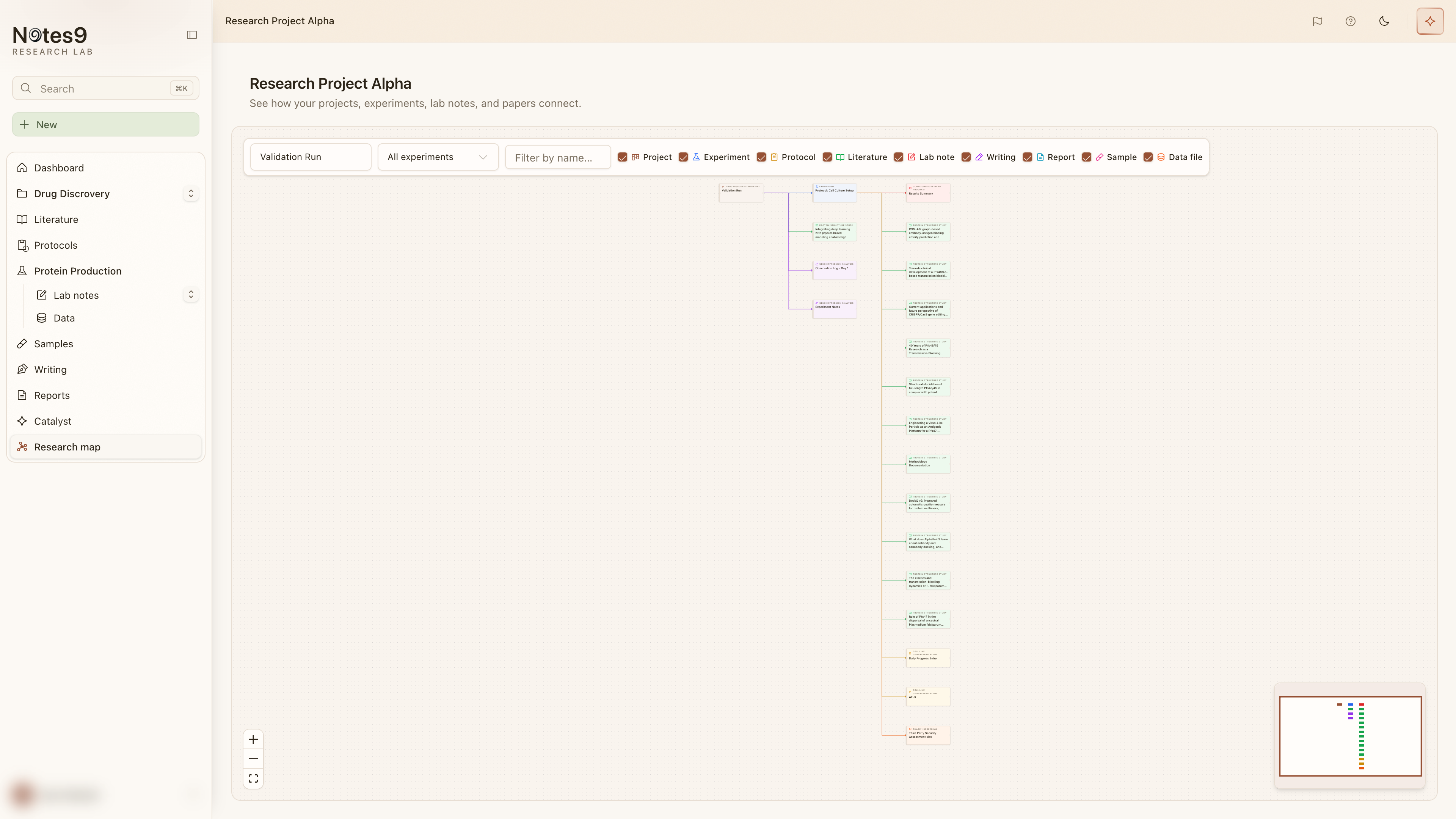
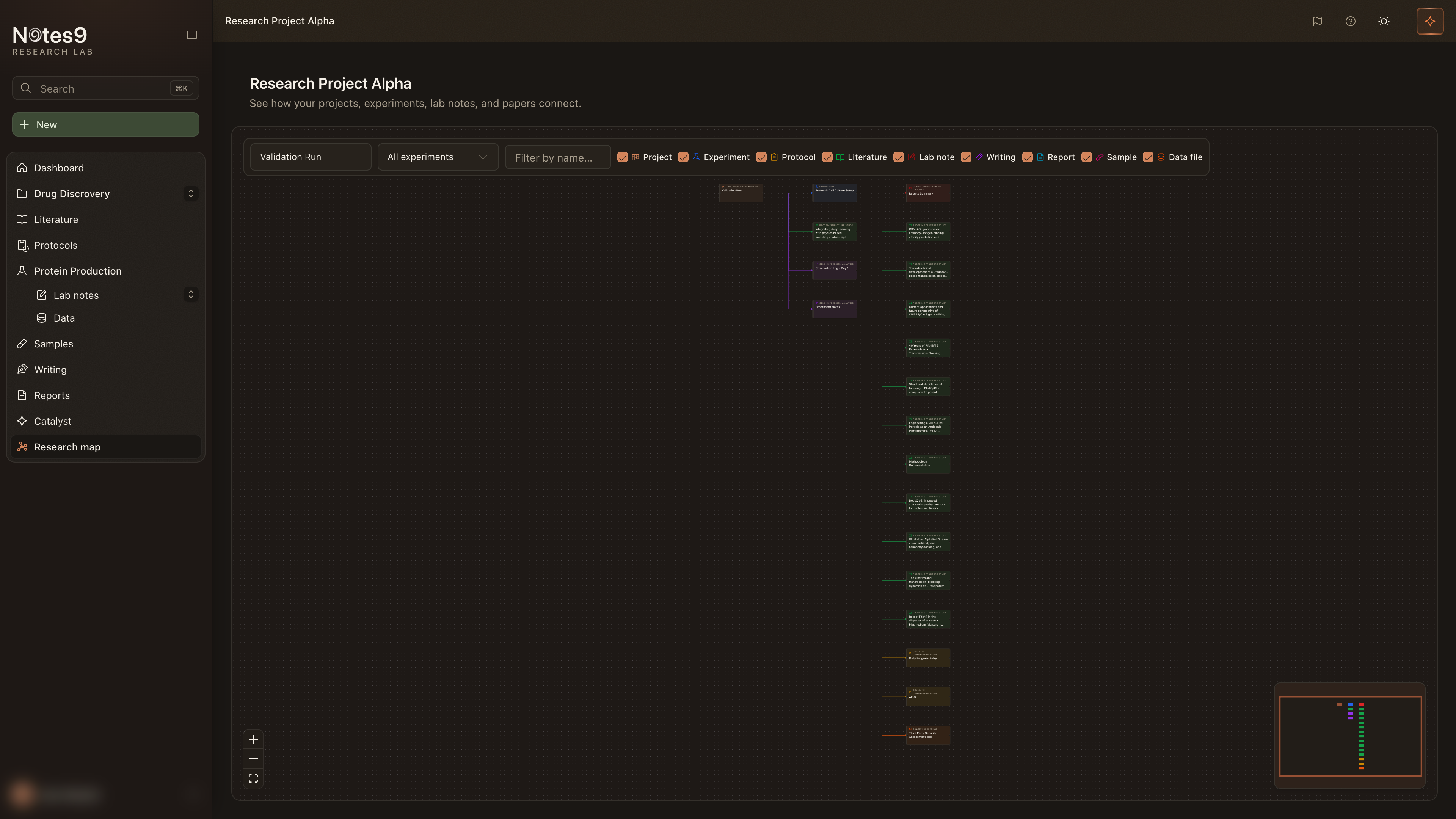
The connections are the product
Each step above writes a link, not just a record. After a few months those links are a map of how your lab actually reached its conclusions, and it is what Catalyst reads when you ask it a question.
Answers you can check
Catalyst cites the note, paper or experiment behind every claim, so you can open the source instead of trusting the summary.
Decisions that survive turnover
The reasoning behind a switched construct or a rejected condition stays attached to the work, not in someone's departed memory.
Write-ups that assemble themselves
By the time you draft, the methods, figures and references are already linked to the experiments they came from.
Set it up around your own research
Answer three questions and Notes9 sets up a workspace matched to your field, with a sample project you can pull apart to see how it fits together.