
One connected layer for literature, lab work, memory, and reporting.
Capture work in structure, retrieve context in seconds, and move from scattered notes to decision-ready outputs, with every step traceable.
Free your data from static notebooks.
Flexible modules for literature, execution, and reporting, all in one connected workspace.
Whatever you are trying to get done today
Make months of work defensible.
Short product moments
How scattered lab work becomes one continuous, connected system.
Find signal faster
Search, stage, and review the papers that matter without breaking the workflow.
See the work in context
Track linked records and context trails instead of reconstructing what happened later.
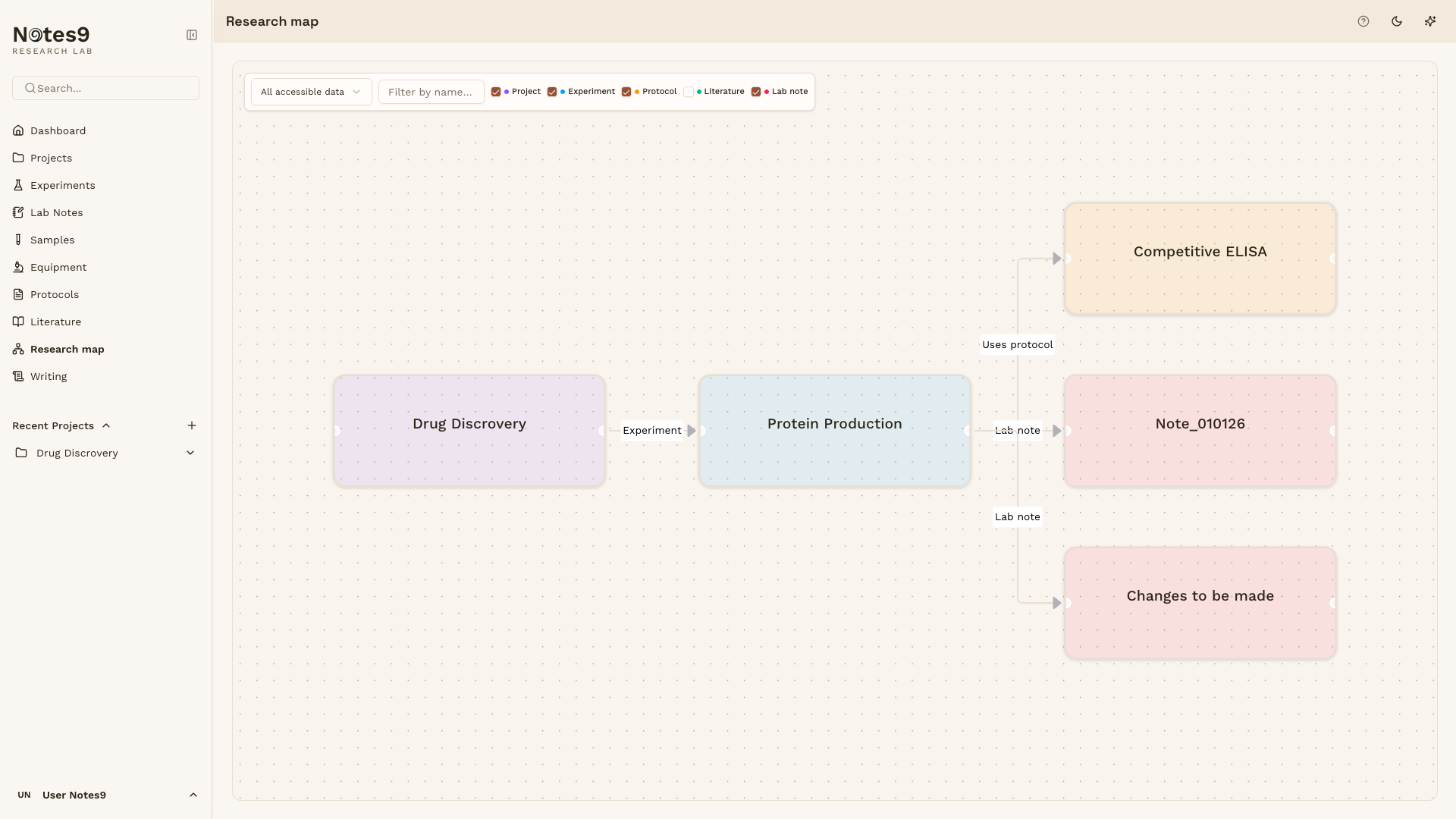
Follow the research graph
Move through connected project structure with a visual map of the workflow.
Turn sources into writing
Read, annotate, and move from evidence to output in one continuous workspace.
Eight papers to a cited PI update
One antibody-expression project, captured end to end, with every step linked to its source.
Upload 8 papers
Catalyst extracts the design rationale across the literature.
See the platform through your own workflow.
We can map Notes9 against your current process to show where value lands first.